Thursday, 17 November 2016

Assignment 2: Animation

I have been tasked with creating my own animation that lasts for 30 seconds or more, having been planned in detail- with the content, materials, equipment and sounds sorted in advance- before production, which involves animating, editing, adding titles and sound as well as exporting it. The animation must include sound and titles but can be about anything so long as it is made from either model based, cut out, pixilisation or time lapse animation. Each step needs to be documented so the stages can be viewed and analyzed by others.

I'm considering doing a model based animation, like this:


'Doctor Who Action figure Adventures: The Oncoming Storm' by Matthew 'Batmanmarch' Toffolo 

However, if I was going to do a model based animation it would have to be considerably shorter, due to the time frame my animation needs to be produced in. 

I'm also thinking about a cut out animation similar to this:

'Reindeer Sweater' by Egor Shumilov 

However, like the last example, my animation would have to be shorter and also not use other peoples music like the video shown.

I've been thinking about what to do for my animation and what it could be about. A reoccurring idea follows a ghost called Billy through his world, and parody's of real life places.

The style of animation I want to make is similar to this:


'Paper War'


'Tease'

However, I don't think my animation will use the objects around, instead using backgrounds that have been made specifically for the animation in order to save time and reduce the complexity of the idea. 


My backup idea is simpler, focusing on just cut out animation and it follows 'Billy the Ghost' as he works -meaning less time would be needed to create the animation.

The ghost itself is going to be based on this image-


To create my animation I will need to draw each of my characters at different angles and with different expressions, as well as having the backgrounds and props drawn so they can be used. I will also need some models to be used for when I change animation styles for a short time. As well as the equipment needed for the animation I will also need a camera to take pictures and the software to play the images one after another at 25 frames per second. 


I have started to draw out some designs for my characters and props as well as a rough storyboard of what will hopefully happen in my animation. This means that after I draw out the characters and backgrounds I can begin animating.

My Concepts and Storyboard-


Now that everything's planned out, I need to start creating my cut outs. To do this I need to draw the outline of my character- in this case the ghost- and then outline them in pen so I can cut them out easily.


I've decided to create the ghost out of tracing paper in order to make him appear transparent, although this does mean that you will be able to see the lines underneath the joints when they're layered. 


At first I sketched the ghost and it's limbs onto the tracing paper, the ghosts drawn at different angles so I can give the impression of turning instead of just jumping at a 90° angle whenever I need to turn his head.


Then I inked the ghosts so they're easier to see and the lines are harder. This also makes it easier for me to cut them out as there's a more definite outline than there was before.


I plan on animating at home using my phone or iPad to take pictures of each frame. If I animate at 25 frames per second, that means I will have to take a minimum of 750 photos to reach the duration limit of 30 seconds minimum - if we went for the minimum of 12 frames per second there would only need to be 360 images. I plan on using a site called Monkey Jam to animate, due to it being easy to use and available online without any purchase required.  

However, the animation is taking longer to create then previously thought due to the amount of images needed as well as the time needed to fix the set when it is knocked by something.

The First Animation Set-Up Used

 The Improved Animation Station


Editing the Animation in Premiere Pro

Billy - The Complete Animation

After taking all the pictures I ended up using iStopMotion to animate as Monkey Jam required each photo to be imported individually. The animation has 600 images and has 12 frames per second, the total length being 50 seconds including credits. I also used Adobe Premiere Pro to insert the music and export the video as an mp4 file.

I ended up dropping the first part of my idea involving the portal due to the time constraints and the length of the animation. The music in the background is copyright free from the free music archive, chosen because I thought it fit the animation well.

I could improve upon my animation by spending more time and using animation software whilst taking the pictures instead of just my phone - which lacks an onion skin to see where everything was placed before, hence the shakiness and jumps in the animation. Another way I could improve is with my animation set up, as I animated at home meaning I had to get a bit creative in how I was taking the images without moving my phones camera from above the paper.

Friday, 21 October 2016

Time Lapse Animation

Time Lapse Animation is made by taking photos over a period of time and then using each picture as a frame, creating the illusion of movement as they are played in rapid succession. The camera must be kept still when taking the photos and the time needed for the event to take place is important so you know when the pictures need to be taken to make sure there aren't any sudden jumps or slow parts. Time Lapse Animation is commonly used to show the progress of something over a period of time.


Examples of Time Lapse-


'Starred Freckles' by Qinni
A Time Lapse of a watercolour painting being completed.

'Northern Lights'
A Time Lapse of the Northern Lights shot over 14 days in Lapland.

Friday, 14 October 2016

Cut Out Animation

Cut Out Animation is the use of different parts of a figure being laid over each other and then moved slightly after each image is taken, making an illusion of movement. The camera itself faces down over the image due to the fact that each part of the figure needs to be moved and that the figure is 2D. These figures can be in colour- which means that each part must be similar so the fit together- or they can be done as a silhouette- meaning they're all black and here is no tone or shade.

Examples of Cut Out Animation-


'Peter Pan' by C Kelly


'Demo Reel' by Yudle Animation


'Etereas' by Daniela Villanueva


Monday, 10 October 2016

CEL Based Animation

CEL Based Animation works using large sheets of plastic and drawings.


People draw the key scenes of what they want to animate, then trace over them on a sheet of large plastic, changing the image slightly each time so each frame is different, before inking and painting the sheet then taking a photo so the frame can be used in the reel of film.


This is how most cartoons are animated, although most of the scenes that aren't key scenes can now be done on a computer by other people to save time. Despite this, films animated this way can still take years to complete and hundreds of drawings are used.


Because CEL Based Animation takes so long, it means that feature length films that are created with this method are becoming rarer, with companies using 3D computer animation instead of drawing everything by hand on a sheet or digitally.


An example of CEL Based Animation is 'Snow White and the Seven Dwarves' by Disney-


Another example is 'Steamboat Willie', also by Disney-


Friday, 7 October 2016

Model Based Animation

Model Based Animation uses 3-Dimensional models. These models are occasionally made out of plasticine, because it is easy to reshape, move and doesn't dry out easily meaning it can be used over long periods of time.


The models are animated by taking multiple pictures with the models moving slightly each time to create the illusion that they are moving, a persistence of vision. This is a form of stop motion animation.


Claymation is the term used for animation using plasticine, usually used in the children's entertainment industry, but can be used to create adult animation too- these are mainly horror but other genes have been done.


The models used can be difficult to create, this being my attempt.


These plasticine models took approximately 30 minutes and were based off other Claymation characters from an existing animation. However they could be improved greatly if I spent more time on them and was patient when sculpting the plasticine.


Examples of Model Based Animation-


'Trapdoor' by Charlie Mills and Terry Brain, 1984-1986
'Trapdoor' was a British Claymation series following the mis-adventures of a group of monsters in a castle involving a trapdoor in the floor.


'Don't Hug Me I'm Scared 2 - Time' by Becky Sloan and Joseph Pelling, 2011- 2016
'Don't Hug Me I'm Scared' is a web series which uses multiple types of model based animation and explores different concepts and other ideas. It is an example of animation meant for older people and not children due to it's disturbing nature.


'Kubo and the Two Strings' by Travis Knight, 2016
'Kubo and the Two Strings' is an upcoming movie which was created by model based animation and has a general audience. The film will be released in late 2016 and uses models with wire skeletons.


My Attempt at Model Based Animation- 


I used iStopMotion 3 to create this simple animation using a Hue HD WebCam to take the images. I think I could greatly improve this animation in a multitude of ways, ranging from more patience to better model construction as it was difficult to move the plasticine without ripping it.

Friday, 30 September 2016

Pioneers in Early Animation

Maries-Georges-Jean-Méliès, known as Georges Méliès, was a pioneer in animation. Born in 1861 in Paris, he was interested in the arts from a young age and pursued a career in stage design and puppetry. 

After studying in both France and London, he took over his fathers job as a factory manager and saved his money to buy the well-known Theatre Robert Houdin in 1888. He found himself working as a showman, performing magic and illusions whilst working on his own tricks. 

When the Lumière brothers revealed their Cinématographe in December, 1895 Georges attempted to buy the machine only to be turned down.

Investigating the idea of moving pictures, he found Robert Paul in London and his projector before building his own. He began presenting other peoples films in 1896 but soon began making his own, each film lasting around a minute as it was made of only one reel. 

After an incident involving a jammed camera whilst filming, Méliès realised that he could make objects appear and disappear on screen, causing him to use this in his films.

One of his most successful films was 'A Trip to the Moon'.


Winsor McCay was born on the 26th September 1869 in Michigan and was known for being the cartoonist behind 'Little Nemo' and the animator for the film 'Gertie the Dinosaur'.

McCay was known to be a talented artist from a young age and soon began making posters and illustrating newspapers and magazines for a profit in 1898. After joining the New York Herald in 1903, he began to draw comic strips, creating the renowned 'Little Nemo, in 1905 which became increasingly popular.

 In between the years 1911 and 1921, Winsor McCay animated multiple films using one drawing to make up one frame. One of the most successful films he animated was 'Gertie the Dinosaur', which involved McCay appearing to give instructions to a trained dinosaur on the screen.

After his other animations failed to make the same impact as 'Gertie the Dinosaur', McCay went back to drawing comic strips in the newspaper. However, his style of animation was something that influenced many different illustrators and animators and was not beaten until Walt Disney began to release his films.


Charlotte Reiniger, also known as Lotte, was a film director and pioneer of silhouette animation from Germany. She was born on the 2nd June, 1899 in Berlin and enjoyed Chinese art and shadow puppets as a child, often putting on shows for family and friends by herself.

As she grew older, she became interested in the films made by Georges Méliès and Paul Wegener, eventually attending the acting group, the Theatre of Max Reinhardt, and making title cards using her silhouettes for Wegener's films.

In 1919, she directed her first film (The Ornament of the Enamored Heart) and then six other short films after her initial success. Her animation career didn't start until 1923 however, when she was asked by Louis Hagen to create a feature length animated film. The film itself, 'The Adventures of Prince Achmed', was almost not shown after failing to find a distributor for a considerable amount of time, but it became a success after it premiered in Paris.

After this she attempted to make multiple other animated feature films, with little success compared to her first attempt due to the appearance of sound in Germany and issues involving Copyright and music.


Tuesday, 27 September 2016

Eary Animation


Before films existed there were several different devices which were used to give a persistence of vision- the illusion of a moving picture.


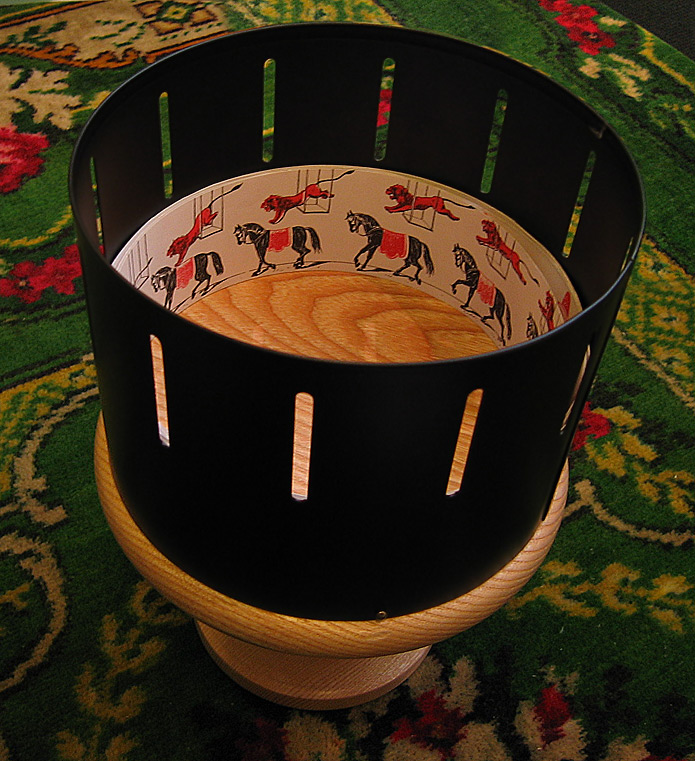
One of these devices was called the Zoetrope, which was a cylinder with multiple images wrapped around the inside, each illustration slightly different to the last. The cylinder also had small slits above each drawing so people could look into the Zoetrope and, when it was spun, see the images appear to move.


Another early animation device was the Thaumatrope, which consisted of a small disc attached to two pieces of string placed opposite each other. Each side of the disc had an image on it, the most common being the images of a bird and a cage. The disc would then be flipped repeatedly by pulling the strings giving the illusion of the pictures being the same, for example the bird would be in the cage.


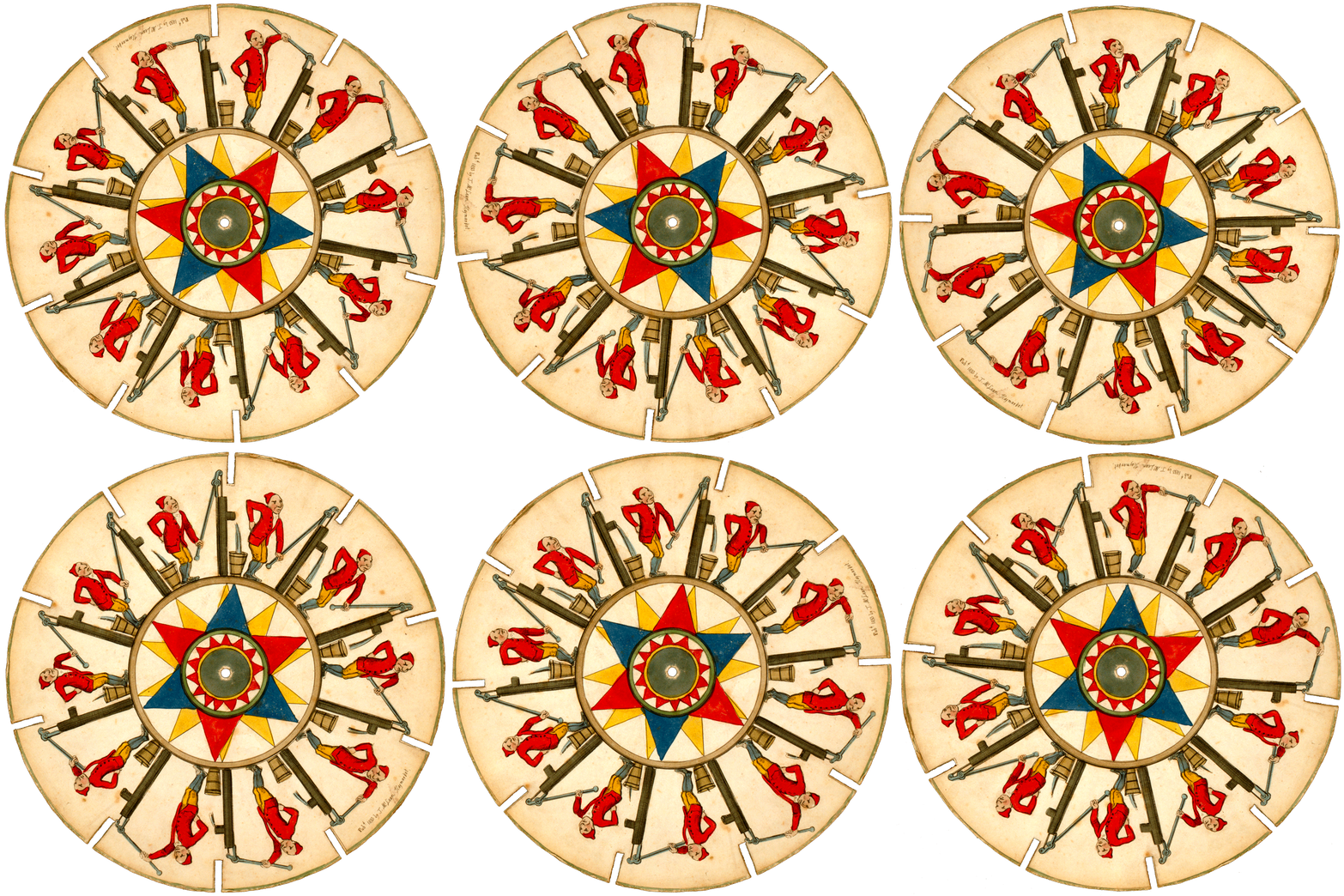
The Phenakistoscope was also used before film existed,  and was a cardboard disc with images on one side and slits to look through, as well as a handle. It would be used in front of a mirror and create a rapid succession of images which would appear as a moving image, not unlike the Zoetrope.


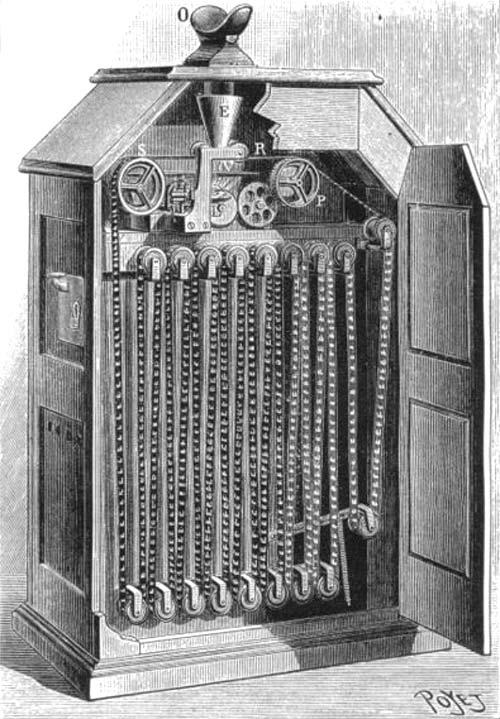
Next is the Kinetoscope, which was invented by Thomas Edison and William Dickson in 1891. The Kinetoscope was designed for one person to view the film at a time through the peephole and worked by having a strip of images rolled over a light source, similar to how films are shown in cinemas.

Finally, the Mutoscope was invented in 1894 and worked like a flip book. There were multiple images stuck onto cards lit by an electrical source and attached to a cylinder. Like the Kinetoscope, only one person could use the Mutoscope at once and the images had to be flicked through using a hand crank. The machines could only hold one reel which would cover a short subject, usually
advertised above it.


Friday, 23 September 2016

The Persistence of Vision


Persistence of vision is the illusion of a moving picture when images are shown one after another in rapid succession. To create this illusion there needs to be at least 12 frames (each frame being an image) per second, otherwise people just see a sequence of pictures. The professional frame rate for animation is 25 frames per second or if you are in America then 29.97.


One of the earliest examples of persistence of vision is by Eadweard Muybridge, who created the illusion of a horse running using multiple photos.


Another, more recent example is a short animation by Ashleigh Burder who uses illustrations instead of photographs.

Thursday, 22 September 2016

Pixilisation


Pixilisation Animation is created, like all forms of stop motion animation, by taking pictures to create frames. However, Pixilisation uses people instead of models or cut-outs, with each photo becoming a frame and the frames being shown one after another to create the illusion of movement. To make sure there are no large 'jumps' in the animation an onion skin is used which shows a transparent layer of the previous frame so we can see if something has moved too far. People mainly use this form of animation for 'shorts' as it takes a long time to create and make sure everything is moving at the correct pace.


My attempt at Pixilisation Animation:

'The Quackening' is a short animation made by myself and Liam Clark using Pixilisation. It took approximately 30 minutes to make and uses over 200 frames, each second being comprised of 12.


'The Human Skateboard' by Pes
This animation was also created using Pixilisation and follows somebody using another person as a skateboard around town.

Thursday, 15 September 2016

An Exploration in Animation


There are multiple animation styles and types which are used by animators. One of the most common types of animation is stop motion, which is created by multiple images of 3D models or 2D illustrations which are played frame by frame to create a moving picture. Another popular form of animation is 3D animation which is made using computer generated images- otherwise known as CGI.


An example of a drawn animation is 'Welcome to Hell', a small animated story following two main characters- Sock and Jonathan. It is created by multiple drawn scenes played in quick succession giving the impression that the characters are moving. This particular example is a web series created by Erica Wester.


Another type of animation involves clay which is sculpted and moved before a picture is taken to create a moving image over time. This is the most common link with stop motion animation (usually referred to as claymation) and is used to create a 3D image without the use of animation software that is used by the likes of Disney and Pixar. This particular animation is called 'The Trapdoor' and follows the mis-adventures of a group of monsters- it was created in 1984 as a television series by Terry Brain and Charlie Mills.


'Meet the Cores 2' is an example of 3D animation using computer software which introduces the different kind of cores from the game Portal- it was created as a web series based of Team Fortress 2's 'Meet the Team' and was animated by Harry Callaghan. This technique is used in many animated movies such as 'Frozen', 'The Incredibles' and 'Finding Nemo'. It is becoming a more popular means of animation in studios for making films.


Another version of stop motion animation is made by using props- in this case Lego- to create the image. This particular example was a fan-made video for an online series called 'Flux Buddies' and features Kim attempting to sell Duncan a Luggage (A character from the popular book series DiscWorld), it was animated by Harry Bossert.