Friday, 30 September 2016

Pioneers in Early Animation

Maries-Georges-Jean-Méliès, known as Georges Méliès, was a pioneer in animation. Born in 1861 in Paris, he was interested in the arts from a young age and pursued a career in stage design and puppetry. 

After studying in both France and London, he took over his fathers job as a factory manager and saved his money to buy the well-known Theatre Robert Houdin in 1888. He found himself working as a showman, performing magic and illusions whilst working on his own tricks. 

When the Lumière brothers revealed their Cinématographe in December, 1895 Georges attempted to buy the machine only to be turned down.

Investigating the idea of moving pictures, he found Robert Paul in London and his projector before building his own. He began presenting other peoples films in 1896 but soon began making his own, each film lasting around a minute as it was made of only one reel. 

After an incident involving a jammed camera whilst filming, Méliès realised that he could make objects appear and disappear on screen, causing him to use this in his films.

One of his most successful films was 'A Trip to the Moon'.


Winsor McCay was born on the 26th September 1869 in Michigan and was known for being the cartoonist behind 'Little Nemo' and the animator for the film 'Gertie the Dinosaur'.

McCay was known to be a talented artist from a young age and soon began making posters and illustrating newspapers and magazines for a profit in 1898. After joining the New York Herald in 1903, he began to draw comic strips, creating the renowned 'Little Nemo, in 1905 which became increasingly popular.

 In between the years 1911 and 1921, Winsor McCay animated multiple films using one drawing to make up one frame. One of the most successful films he animated was 'Gertie the Dinosaur', which involved McCay appearing to give instructions to a trained dinosaur on the screen.

After his other animations failed to make the same impact as 'Gertie the Dinosaur', McCay went back to drawing comic strips in the newspaper. However, his style of animation was something that influenced many different illustrators and animators and was not beaten until Walt Disney began to release his films.


Charlotte Reiniger, also known as Lotte, was a film director and pioneer of silhouette animation from Germany. She was born on the 2nd June, 1899 in Berlin and enjoyed Chinese art and shadow puppets as a child, often putting on shows for family and friends by herself.

As she grew older, she became interested in the films made by Georges Méliès and Paul Wegener, eventually attending the acting group, the Theatre of Max Reinhardt, and making title cards using her silhouettes for Wegener's films.

In 1919, she directed her first film (The Ornament of the Enamored Heart) and then six other short films after her initial success. Her animation career didn't start until 1923 however, when she was asked by Louis Hagen to create a feature length animated film. The film itself, 'The Adventures of Prince Achmed', was almost not shown after failing to find a distributor for a considerable amount of time, but it became a success after it premiered in Paris.

After this she attempted to make multiple other animated feature films, with little success compared to her first attempt due to the appearance of sound in Germany and issues involving Copyright and music.


Tuesday, 27 September 2016

Eary Animation


Before films existed there were several different devices which were used to give a persistence of vision- the illusion of a moving picture.


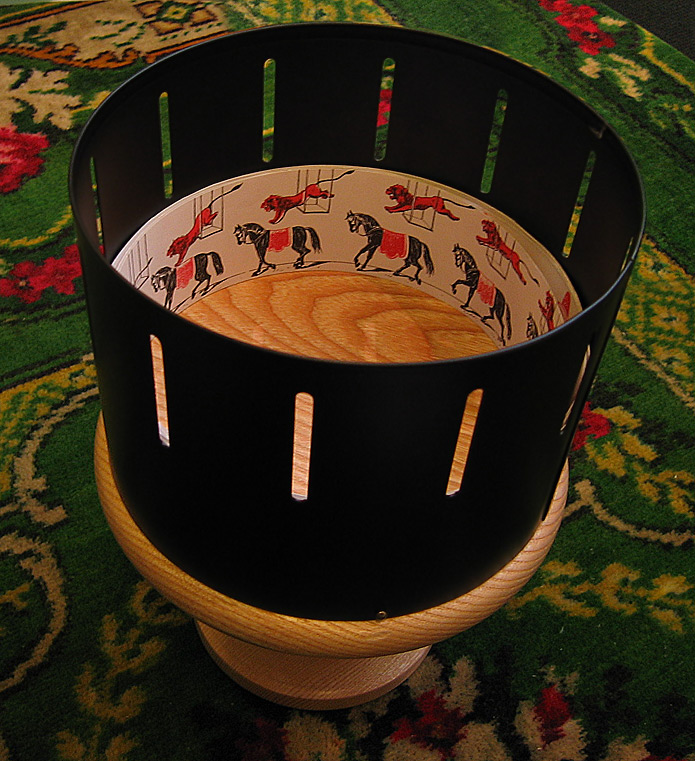
One of these devices was called the Zoetrope, which was a cylinder with multiple images wrapped around the inside, each illustration slightly different to the last. The cylinder also had small slits above each drawing so people could look into the Zoetrope and, when it was spun, see the images appear to move.


Another early animation device was the Thaumatrope, which consisted of a small disc attached to two pieces of string placed opposite each other. Each side of the disc had an image on it, the most common being the images of a bird and a cage. The disc would then be flipped repeatedly by pulling the strings giving the illusion of the pictures being the same, for example the bird would be in the cage.


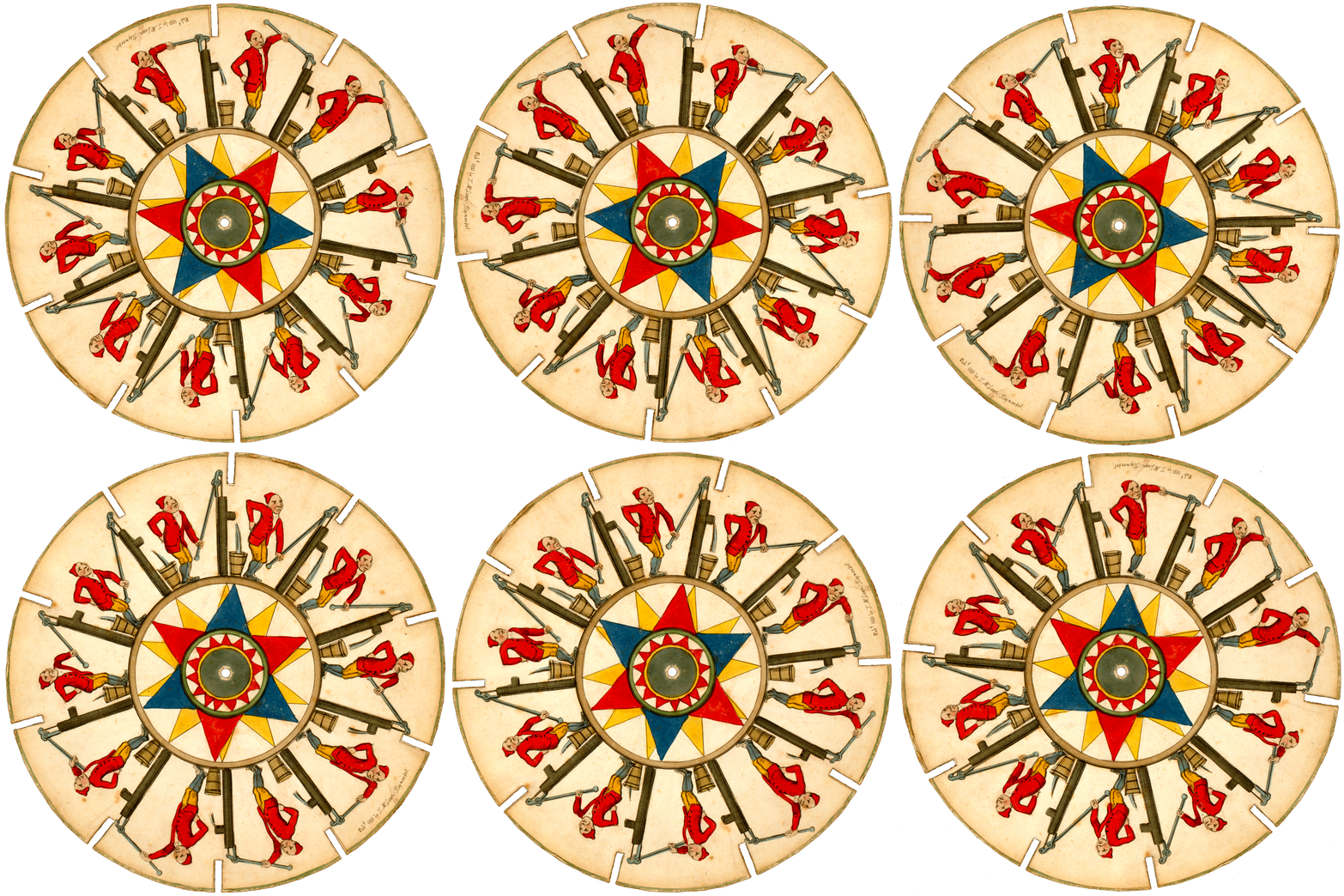
The Phenakistoscope was also used before film existed,  and was a cardboard disc with images on one side and slits to look through, as well as a handle. It would be used in front of a mirror and create a rapid succession of images which would appear as a moving image, not unlike the Zoetrope.


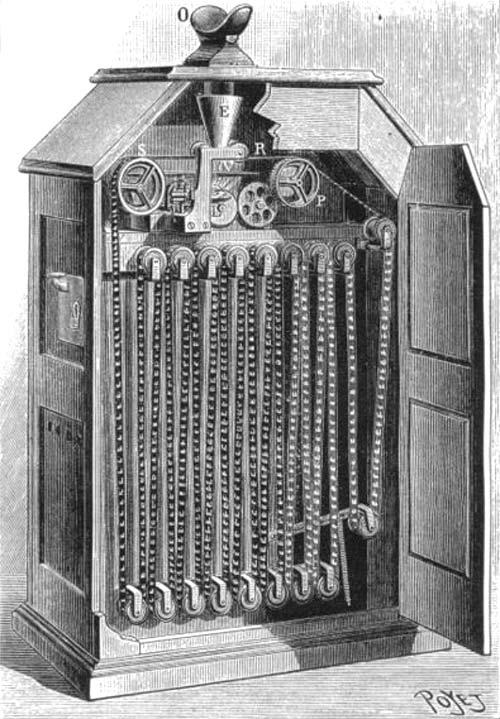
Next is the Kinetoscope, which was invented by Thomas Edison and William Dickson in 1891. The Kinetoscope was designed for one person to view the film at a time through the peephole and worked by having a strip of images rolled over a light source, similar to how films are shown in cinemas.

Finally, the Mutoscope was invented in 1894 and worked like a flip book. There were multiple images stuck onto cards lit by an electrical source and attached to a cylinder. Like the Kinetoscope, only one person could use the Mutoscope at once and the images had to be flicked through using a hand crank. The machines could only hold one reel which would cover a short subject, usually
advertised above it.


Friday, 23 September 2016

The Persistence of Vision


Persistence of vision is the illusion of a moving picture when images are shown one after another in rapid succession. To create this illusion there needs to be at least 12 frames (each frame being an image) per second, otherwise people just see a sequence of pictures. The professional frame rate for animation is 25 frames per second or if you are in America then 29.97.


One of the earliest examples of persistence of vision is by Eadweard Muybridge, who created the illusion of a horse running using multiple photos.


Another, more recent example is a short animation by Ashleigh Burder who uses illustrations instead of photographs.

Thursday, 22 September 2016

Pixilisation


Pixilisation Animation is created, like all forms of stop motion animation, by taking pictures to create frames. However, Pixilisation uses people instead of models or cut-outs, with each photo becoming a frame and the frames being shown one after another to create the illusion of movement. To make sure there are no large 'jumps' in the animation an onion skin is used which shows a transparent layer of the previous frame so we can see if something has moved too far. People mainly use this form of animation for 'shorts' as it takes a long time to create and make sure everything is moving at the correct pace.


My attempt at Pixilisation Animation:

'The Quackening' is a short animation made by myself and Liam Clark using Pixilisation. It took approximately 30 minutes to make and uses over 200 frames, each second being comprised of 12.


'The Human Skateboard' by Pes
This animation was also created using Pixilisation and follows somebody using another person as a skateboard around town.

Thursday, 15 September 2016

An Exploration in Animation


There are multiple animation styles and types which are used by animators. One of the most common types of animation is stop motion, which is created by multiple images of 3D models or 2D illustrations which are played frame by frame to create a moving picture. Another popular form of animation is 3D animation which is made using computer generated images- otherwise known as CGI.


An example of a drawn animation is 'Welcome to Hell', a small animated story following two main characters- Sock and Jonathan. It is created by multiple drawn scenes played in quick succession giving the impression that the characters are moving. This particular example is a web series created by Erica Wester.


Another type of animation involves clay which is sculpted and moved before a picture is taken to create a moving image over time. This is the most common link with stop motion animation (usually referred to as claymation) and is used to create a 3D image without the use of animation software that is used by the likes of Disney and Pixar. This particular animation is called 'The Trapdoor' and follows the mis-adventures of a group of monsters- it was created in 1984 as a television series by Terry Brain and Charlie Mills.


'Meet the Cores 2' is an example of 3D animation using computer software which introduces the different kind of cores from the game Portal- it was created as a web series based of Team Fortress 2's 'Meet the Team' and was animated by Harry Callaghan. This technique is used in many animated movies such as 'Frozen', 'The Incredibles' and 'Finding Nemo'. It is becoming a more popular means of animation in studios for making films.


Another version of stop motion animation is made by using props- in this case Lego- to create the image. This particular example was a fan-made video for an online series called 'Flux Buddies' and features Kim attempting to sell Duncan a Luggage (A character from the popular book series DiscWorld), it was animated by Harry Bossert.